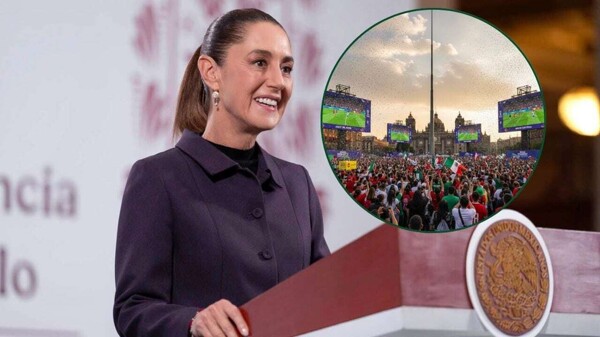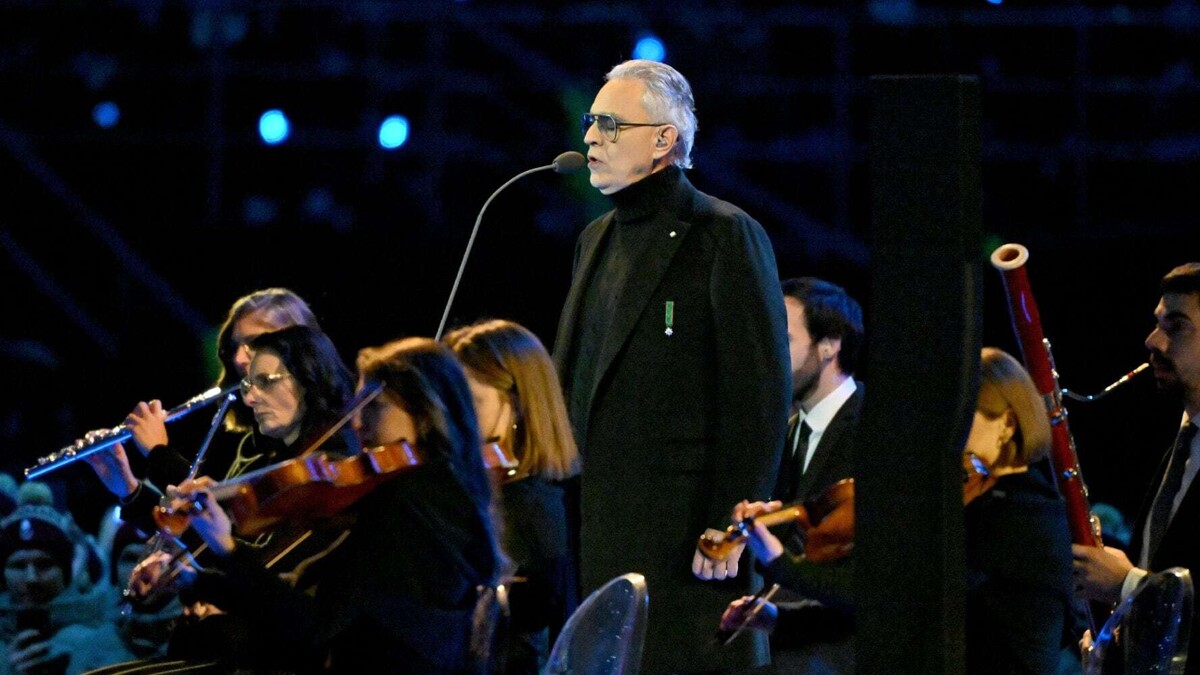
The life of Italian tenor Andrea Bocelli was marked by an accident at the age of 12, when a blow during a soccer match caused a hemorrhage that led to total blindness. The singer himself reconstructed the moment in the documentary 'Andrea Bocelli: Because I Believe,' which was originally presented at the Toronto International Film Festival in 2024. In one of the key scenes, he recounts how an unexpected event changed his life forever. 'While I was at the boarding school, they unexpectedly put me as a goalkeeper in a soccer match... The ball hit me in the face, causing a hemorrhage... and the rest, as they say, is history,' he explains according to statements collected by People. This testimony is complemented by the voice of the Italian tenor's brother, who underscores the exact moment of the change: 'That's when darkness fell.' Before that episode, the artist was already facing vision problems. 'I remember very well the world I saw then. The colors, the textures.' According to data from the National Institute for the Blind (INCI) of the Colombian Government, Bocelli was born with congenital glaucoma, a condition that deteriorated his vision from childhood until it left him completely blind after the sports accident. The visual disability of the famous Italian singer did not begin with the accident. From an early age, his family sought intensive medical treatments. His brother details that, at three and a half years old, Bocelli underwent 13 surgeries in Turin to treat the glaucoma. His mother rejected any approach based on compassion. 'What's the use of pity?' she used to question, as is recovered in interviews included in the documentary. The singer himself recognizes the key role of his mother in his development: 'She feared that I could not fend for myself. She worked very hard to give me peace and stability.' That environment, focused on discipline and autonomy, marked the path of an artist who would later achieve global recognition. From stage fright to technique: The turning point with Pavarotti The documentary directed by Cosima Spender also addresses the challenges he faced in his career, even after consolidating himself as a singer. Bocelli reveals that for years he dealt with anxiety on stage: 'I suffered from stage fright... terrible palpitations that did not abandon me, not even during the concert.' The change came after meeting Luciano Pavarotti, whom he identifies as a decisive figure in his technical evolution. 'When I rehearsed with him, I understood that he had a perfect technique and I did not,' he affirms. 'It was a torture,' he describes. At seven years old, due to the refusal of local schools to accept him, he entered a boarding school for people with visual disabilities. Friends and friends, next Saturday, April 18, Andrea Bocelli will be in the heart of Mexico City, who will offer a unique concert in its genre and will count on the participation of special guests. From that moment on, he focused on perfecting his vocal execution until he overcame that fear. Head of government Clara Brugada announced that the Italian tenor will give a free concert at the Zócalo of Mexico City on April 18. The event will be part of the cultural agenda of the capital and will feature special guests yet to be confirmed. It will be a magical evening that reaffirms Mexico City as the world's cultural capital. The repertoire has not been revealed, but the Mexican public will be able to hear some of the most recognized interpretations of the artist, who has collaborated with international figures and maintains a current career in classical and popular music. The family separation deeply marked that stage. 'It was the worst time of my life,' recognizes the tenor about those years, in which he only returned home during vacations and received monthly visits. 'I could see everything, but up close': The memories before blindness The documentary also recovers the visual memory that the singer retains from his childhood. 'I could see everything, but up close.' From an early age, his family sought intensive medical treatments. His brother details that, at three and a half years old, Bocelli underwent 13 surgeries in Turin to treat the glaucoma. His mother rejected any approach based on compassion. 'What's the use of pity?' she used to question, as is recovered in interviews included in the documentary. The singer himself recognizes the key role of his mother in his development: 'She feared that I could not fend for myself. She worked very hard to give me peace and stability.' That environment, focused on discipline and autonomy, marked the path of an artist who would later achieve global recognition. From stage fright to technique: The turning point with Pavarotti The documentary directed by Cosima Spender also addresses the challenges he faced in his career, even after consolidating himself as a singer. Bocelli reveals that for years he dealt with anxiety on stage: 'I suffered from stage fright... terrible palpitations that did not abandon me, not even during the concert.' The change came after meeting Luciano Pavarotti, whom he identifies as a decisive figure in his technical evolution. 'When I rehearsed with him, I understood that he had a perfect technique and I did not,' he affirms. 'It was a torture,' he describes. At seven years old, due to the refusal of local schools to accept him, he entered a boarding school for people with visual disabilities.